Councilmember Tallman Resigns Amid Ethics Dispute, Deepening Divisions in Newcastle City Council
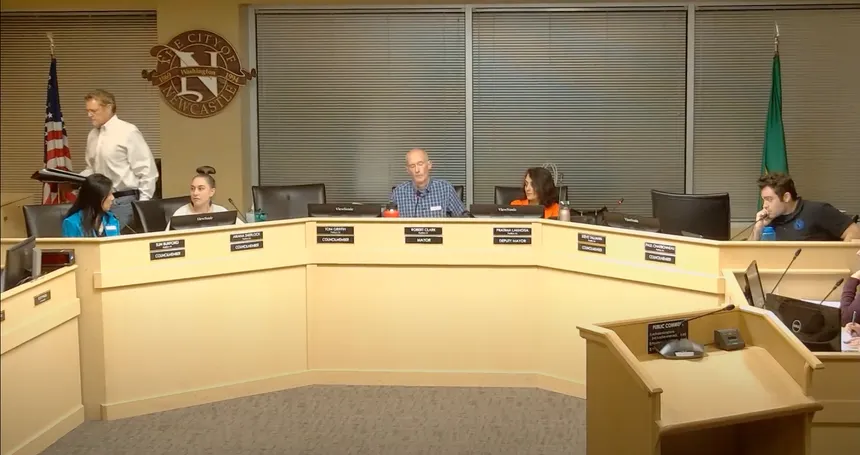
Steve Tallman standing up to leave, while other council members and Mayor Clark remain seated.
Newcastle, WA – Tensions within the Newcastle City Council escalated during Tuesday’s meeting as Councilmember Steve Tallman abruptly resigned, following a clash over an ethics complaint involving fellow Councilmember Paul Charbonneau. This dispute not only exposed internal divisions but also raised questions about Mayor Robert Clark’s leadership and his handling of council conflicts.
Tallman’s resignation followed Mayor Clark’s decision to halt Tallman’s attempt to raise an ethics violation against Charbonneau. The complaint stemmed from Charbonneau’s remarks during an earlier discussion about a Hindu Heritage Month proclamation, where he warned against politicians whose actions do not align with their words. Tallman interpreted this as a personal attack, citing his support for the Hindu community despite voting against the proclamation out of a commitment to neutrality.
Mayor Clark, however, shut down the ethics discussion, claiming Charbonneau’s comments were general and not directed at any individual. His decision to move the meeting forward, while aimed at maintaining order, has sparked mixed reactions, revealing deeper fractures within the council.
Tallman’s Departure: A Symptom of Deeper Dysfunction
Tallman’s resignation wasn’t solely due to the ethics dispute, it reflects a broader dissatisfaction with the council’s increasingly divided atmosphere. In his resignation statement, he criticized the council as a "misguided, divisive, and unproductive environment," signaling deeper ideological rifts.
Tallman has often found himself at odds with more progressive members of the council, particularly on issues related to diversity and inclusivity. His resistance to supporting measures like the Hindu Heritage Month proclamation and his prior opposition to flying the Pride flag highlight a growing ideological divide between those advocating for inclusivity and those who see such actions as unnecessary or symbolic. His departure now leaves the council grappling with a leadership vacuum and unresolved tensions over how to represent Newcastle’s increasingly diverse population.
Scrutiny on Mayor Clark’s Leadership Style
Mayor Clark’s decision to block Tallman’s ethics complaint has placed his leadership style under renewed scrutiny. His emphasis on keeping meetings on track and avoiding confrontation has been viewed by some as necessary to maintain order, but others see it as dismissive of serious concerns. This marks another instance where Clark’s leadership has steered discussions away from ethical accountability, as seen in prior council censure attempts.
Clark’s tone during the meeting, at one point stating he would act as a “dictator” if necessary to control the proceedings, has raised eyebrows and drawn criticism. His leadership style often involves imposing control and shaping the narrative rather than fostering open dialogue, particularly on contentious issues such as inclusivity and ethics. By shutting down discussion, Clark may have sidestepped further conflict, but he also avoided addressing the underlying divisions that continue to disrupt the council.
Inclusivity and Ethical Governance: Core Issues in the Conflict
At the heart of the council’s discord lie broader questions about inclusivity and ethical governance. The Hindu Heritage Month proclamation, which initially triggered the dispute, mirrors other recent tensions over how the council engages with Newcastle’s growing minority communities. This includes ongoing debates over recognizing LGBTQ+ issues, such as flying the Pride flag, which Tallman and other conservative-leaning members have consistently opposed.
Mayor Clark’s past remarks, including his statement that the American flag should be the only symbol of unity, underscore a larger resistance to recognizing marginalized groups. This view, shared by members like Tom Griffin and the now-resigned Steve Tallman, contrasts sharply with councilmembers like Paul Charbonneau and Ariana Sherlock, who advocate for a more inclusive approach that addresses the needs and rights of historically underrepresented communities, including LGBTQ+ residents.
These ideological divides have contributed to an ongoing dysfunction, as Clark’s leadership continues to prioritize maintaining control over fostering inclusive dialogue. His resistance to LGBTQ+ inclusivity measures and his reluctance to tackle racial discrimination within the city’s policies have polarized the council further, making productive discussions around diversity difficult to achieve.
What’s Next for Newcastle City Council?
While Tallman’s resignation is a significant development, it does not resolve the deep-rooted issues facing the Newcastle City Council. The council remains sharply divided over critical issues of representation and diversity, and Mayor Clark’s leadership approach will continue to face scrutiny in the coming months. His tendency to control council outcomes, often by deflecting attention from more uncomfortable ethical concerns, may further contribute to the growing divisions if not addressed.
Moving forward, the council must prioritize transparency, particularly in its ethical guidelines and enforcement, and ensure that all voices, especially those advocating for marginalized communities, are heard and respected. This includes creating a more inclusive environment that goes beyond symbolic gestures and addresses the real concerns of Newcastle’s diverse population.
The events of the October 15th meeting serve as a reminder of the persistent divisions within the Newcastle City Council. Councilmember Tallman’s resignation may have been a breaking point, but without meaningful change in leadership and a commitment to inclusivity, these deeper conflicts will remain unresolved.
Resources:
- Youtube session stream recording: https://www.youtube.com/live/BH1oXvAg2xA?si=Sr0USVGgdmBCZp_q&t=4570
