An Analysis of Newcastle City Council's Debate on Inclusivity and Ethical Leadership
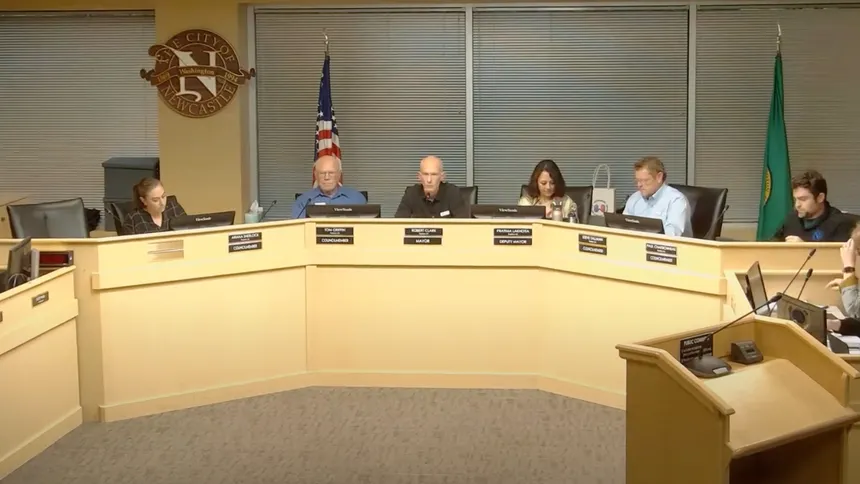
Newcastle City Council members are seated at the Newcastle City Council meeting, with Mayor Robert Clark at the center.
Newcastle, WA – At the October 1st, 2024 Newcastle City Council meeting, several key issues came to light that revealed deeper tensions within the city’s leadership. The discussions centered around a proposal to declare "Hindu Heritage Month", an attempt to censure Councilmember Paul Charbonneau, and a debate on whether the city’s Comprehensive Plan should address racial discrimination. These topics stirred emotional responses, highlighting not only the city’s struggle with inclusivity but also the use of rhetorical manipulation, selective enforcement of ethical standards, and personal political agendas. As the council wrestled with these debates, questions about ethical leadership and the future of inclusivity in Newcastle took center stage.
Hindu Heritage Month
Mayor Robert Clark and Councilmember Steve Tallman's opposition to the Hindu Heritage Month proclamation used several rhetorical tactics to shape the debate in his favor. He argued that recognizing one group would lead to an unmanageable number of similar requests, a classic slippery slope fallacy that cast inclusivity as a burden rather than a chance to celebrate diversity. More notably, Mayor Clark’s statement that all residents are "children of God" imposed a Christian-centric worldview on what was a civic matter, reinforcing Christian hegemony and downplaying the need to uplift underrepresented groups. This approach framed the issue as one of universal equality under God, which masked the specific inequities faced by minority communities and reinforced the status quo. A public speaker echoed Mayor Clark’s concern, claiming that recognizing "Hindu Heritage Month" would marginalize Christianity, an argument that reflects a zero-sum fallacy and falsely portrays Christianity as under threat.
In reality, Christianity remains the dominant cultural and religious force in the United States. Christian holidays like Christmas and Easter are widely observed by public institutions, and Christian symbols, such as "In God We Trust", are ingrained in public spaces. Far from being marginalized, Christianity enjoys significant political influence, particularly among white evangelical groups, which continue to shape policies on issues like abortion and LGBTQ+ rights. The idea that recognizing Hindu Heritage Month could diminish Christianity ignores the reality of Christian privilege. Christian practices are widely recognized and protected by law, and its status as the majority religion in the U.S. ensures that it remains central to public life.
The notion that recognizing "Hindu Heritage Month" would somehow marginalize Christianity is a false equivalence. Recognizing one group’s cultural or religious contributions does not diminish the rights or presence of another. Inclusivity is not a finite resource, and honoring Hindu contributions enriches the community without infringing on Christianity’s established position. Christianity, which represents the majority the U.S. population, has long benefited from cultural dominance, while minority religions like Hinduism struggle for visibility. Proclamations like "Hindu Heritage Month" aim to correct these imbalances, offering representation to groups that are often overlooked.
Ultimately, Mayor Clark’s opposition and the argument of Christian marginalization in this context invert the real dynamics of privilege and oppression. While Christians rarely experience systemic discrimination, minority religions often face prejudice and underrepresentation. Efforts to elevate these groups through cultural recognition are not an attack on the majority, but rather an attempt to foster a more inclusive and equitable community.
Newcastle's Comprehensive Plan
The debate over whether Newcastle's Comprehensive Plan should address racial discrimination also underscored a critical distinction between equality and equity, a difference that lay at the heart of the council's disagreement. Mayor Clark's opposition was grounded in the idea of equality, where everyone is treated the same regardless of their background or circumstances. By framing the issue as one of universal equality, Mayor Clark implied that since Newcastle had no direct history of practices like redlining, there was no need to single out any group for special consideration. However, this view overlooks the broader issue of equity, which focuses on fairness and justice, recognizing that not everyone starts from the same place due to historical and systemic disadvantages.
Equality implies giving everyone the same resources or opportunities. For example, equality in city planning might mean applying the same zoning laws or housing policies to all residents without distinction. But this approach assumes that all residents have the same needs, face the same obstacles, and benefit equally from those policies. It ignores the historical and systemic barriers that have disadvantaged certain groups, particularly racial minorities.
Equity, on the other hand, acknowledges that different communities may need different levels of support or resources to reach the same outcomes. In the context of the Comprehensive Plan, including equity-focused language would recognize that while Newcastle may not have a documented history of discriminatory practices, it is still part of the broader King County region, which has long been shaped by redlining, exclusionary zoning, and racial inequities. Addressing equity in future planning would ensure that the city’s policies are designed to actively correct these imbalances and prevent perpetuating disparities in housing, access to services, and economic opportunities.
For instance, an equitable approach to urban planning might involve creating policies that specifically address the needs of historically marginalized groups, such as ensuring affordable housing or creating pathways to homeownership for residents who have been historically excluded from these opportunities. It also might mean engaging directly with minority communities to understand their unique challenges and tailor the city’s development strategies to meet those needs.
Mayor Clark's focus on equality overlooked the importance of creating equitable policies that account for the deep, long-standing inequities in the broader region. Councilmember Ariana Sherlock, in contrast, emphasized the need for equity-focused language in the Comprehensive Plan to avoid perpetuating systemic exclusions that still impact marginalized groups. By insisting that Newcastle should address these issues directly, Councilmember Sherlock’s position highlighted the necessity of acknowledging past harms and ensuring that future growth in the city is inclusive and fair to all residents, not just those who have historically been well-served by existing systems.
This distinction between equality and equity is crucial in understanding why the inclusion of language around racial discrimination in Newcastle's planning documents goes beyond merely reflecting the city’s past. It is about actively shaping its future to ensure that all residents, regardless of their racial or economic background, have access to the same opportunities and quality of life. Without addressing equity, policies that appear neutral or equal on the surface may continue to favor those who have historically been privileged, leaving marginalized groups behind.
Councilmember Paul Charbonneau censure attempt
The attempt to censure Councilmember Charbonneau revealed significant political maneuvering within the Newcastle City Council, raising questions about the selective enforcement of ethical standards. The complaint against Councilmember Charbonneau stemmed from allegations that he had misrepresented his views to the media by not making it clear that his opinions were personal and did not represent the council. Councilmember Charbonneau, however, defended himself by reading aloud an email he had sent to a reporter, in which he explicitly stated that his comments were personal. This contradicted the basis of the complaint, casting doubt on its legitimacy.
The discussion of the censure highlighted broader concerns about the uneven application of the city's standards of conduct. Councilmember Charbonneau and other councilmembers, including Deputy Mayor Pratima Lakhotia, pointed out that similar behaviors by other councilmembers had gone unchallenged, suggesting that the standards were being selectively applied. Councilmember Charbonneau argued that the censure was politically motivated, particularly given the timing, the complaint was brought forward months after the alleged incident. This delay raised suspicions that the effort was less about upholding ethical standards and more about political retaliation.
Throughout the debate, Councilmember Charbonneau and his supporters emphasized that the standards of conduct were being manipulated to target certain members for political reasons. They argued that this selective enforcement not only undermined the integrity of the council but also exposed deeper political tensions. Some councilmembers, Councilmember Charbonneau included, described the censure attempt as a "political stunt" or an "act of vengeance" designed to discredit him rather than address any genuine ethical concerns. These accusations of political gamesmanship were reinforced by the fact that the complaint was based on a technicality, which Councilmember Charbonneau had already addressed in his communication with the media.
Ultimately, the vote to censure Councilmember Charbonneau failed, deepening the political divide within the council. The outcome reflected broader issues of accountability and fairness, with some councilmembers calling for consistent enforcement of the ethics code, while others viewed the censure as a weapon used to settle political scores. This episode not only highlighted the council's internal struggles with ethics and leadership but also raised questions about how and when ethical standards should be applied, and to whom.
Public comments
During the public comment period, a speaker delivered a pointed critique of Mayor Clark’s inconsistency on ethical leadership, highlighting several past remarks and actions that questioned his commitment to fairness and equality. The speaker addressed Mayor Clark’s selective use of constitutional principles, citing his refusal to recognize the LGBTQ+ community or fly the Pride flag. They also pointed to a recent June statement in which Mayor Clark claimed there is “no separation between church and state,” a claim already refuted by many, including this website.
The speaker also reminded the council of derogatory comments Mayor Clark had made in the past toward marginalized communities, such as telling LGBTQ+ individuals to "stop being victims" and advising Black Americans to "get over slavery." These statements, the speaker argued, revealed a troubling pattern of dismissing the concerns of historically marginalized groups, further undermining Mayor Clark’s current claims of promoting fairness and inclusivity.
Adding to the critique, the speaker highlighted a deeply concerning incident in which Councilmember Tallman had not only acted as a character witness for someone involved in the murder of an unarmed child, but had also appointed this individual to the Newcastle's "ad hoc Public Safety Committee". The individual, Aaron Brown Myers, had a troubling history, including a 2022 incident where he threatened to shoot an unarmed bicyclist, mistakenly believing they were carrying a gun. The speaker argued that these actions showed a glaring lack of accountability and ethical consistency on Councilmember Tallman’s part, raising serious concerns about his ability to provide ethical leadership for the city.
The speaker didn’t stop there. They also addressed the broader intolerance within the council, specifically toward the LGBTQ+ and Hindu communities, criticizing those who had opposed recognizing these groups in public spaces. The resistance to proclamations supporting marginalized communities was framed as part of a larger pattern of exclusion and bigotry within the leadership.
In closing, the speaker called on the council to reflect on their actions and positions, urging them to be better advocates for equality and justice in Newcastle. Their remarks struck a chord, later receiving messages of support from attendees and even a note of thanks from Deputy Mayor Lakhotia for speaking out. By exposing the selective application of values and the lack of genuine accountability, the speaker made a powerful case for greater inclusivity and ethical consistency in the city's leadership.
Moving forward, Newcastle’s leadership must take a more inclusive approach to recognizing minority communities and fostering trust within the council. Revisiting the Hindu Heritage Month proposal with clearer criteria for cultural recognition would help prevent concerns of favoritism while encouraging community engagement. Furthermore, the council must address the political tensions and selective enforcement of ethical standards that have weakened its credibility. Establishing consistent, clear guidelines for ethical behavior and ensuring all members are held accountable will be essential for restoring trust. Lastly, Newcastle must integrate discussions of racial equity into its future city planning, acknowledging the broader history of racial discrimination in King County to create a more inclusive, forward-thinking city for all its residents.
