Newcastle Council Divided Over Inclusivity and Ethical Governance in Heated Debate
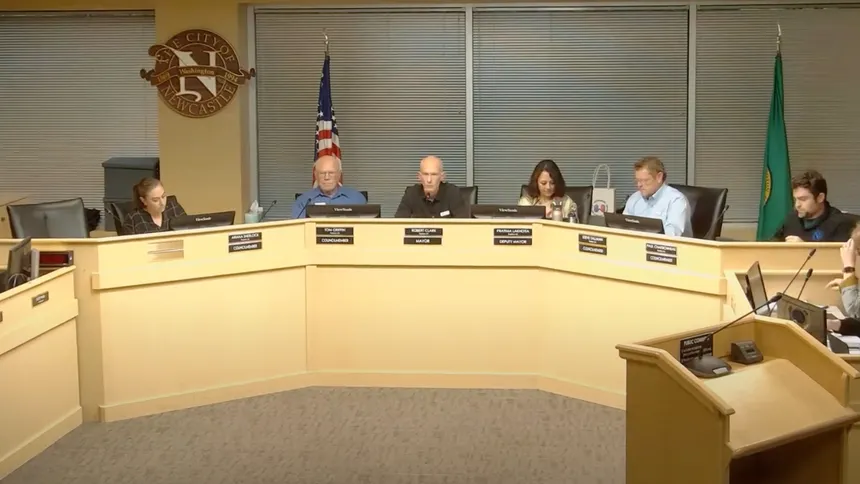
Newcastle City Council members are seated at the Newcastle City Council meeting, with Mayor Robert Clark at the center.
Newcastle, WA – At the October 1st, 2024 Newcastle City Council meeting, several issues exposed deep divisions among city leaders. The most contentious topics included a proposal to recognize Hindu Heritage Month, an attempt to censure Councilmember Paul Charbonneau, and a debate on whether the city’s Comprehensive Plan should address racial discrimination. These discussions not only highlighted the challenges of fostering inclusivity but also raised concerns about ethical governance and the use of rhetoric and selective standards, particularly by Mayor Robert Clark.
Deputy Mayor Pratima Lakhotia proposed recognizing October as Hindu Heritage Month to celebrate the contributions of Newcastle’s Hindu community. Councilmembers Ariana Sherlock and Paul Charbonneau supported the idea, arguing that it would promote inclusivity and honor the city’s cultural diversity.
However, Mayor Robert Clark, backed by Councilmember Tom Griffin, opposed the proclamation. Clark warned that recognizing one group could open the door to a flood of similar requests from other communities, which could overwhelm the council. He also used religious rhetoric, stating that all residents are "children of God" and should be treated equally, implying that recognizing one group might undermine this principle of equality.
Public opinions were divided. One speaker from the Hindu community supported the recognition, emphasizing the importance of representation for underrepresented groups. On the other hand, another speaker, echoing Mayor Clark’s concerns, argued that recognizing Hindu Heritage Month could unfairly marginalize Christian traditions.
In the same meeting, Councilmember Paul Charbonneau faced an attempt to censure him over claims that he misrepresented his views to the media. The complaint accused him of failing to clarify that his comments were personal opinions, not reflective of the council as a whole. Charbonneau defended himself by reading the email in question, which clearly stated that his views were personal.
Many, including Deputy Mayor Lakhotia, saw the censure attempt as politically motivated. Lakhotia described it as "an act of vengeance," implying that the move was more about undermining Charbonneau’s position than about ethical concerns. Ultimately, the vote to censure him failed, further exposing political tensions within the council and raising questions about the selective enforcement of ethical standards, where some members were held to different levels of scrutiny than others.
Another significant point of debate was the city’s Comprehensive Plan and whether it should address racial discrimination. Mayor Clark opposed including language about racial inequities, arguing that Newcastle had no history of discriminatory practices like redlining. He felt that including such references would create a misleadingly negative image of the city. Clark also dismissed broader social equity efforts by King County, framing them as part of an unnecessary "social agenda" that Newcastle need not follow. He went so far as to suggest that the city could reject the county's recommendations entirely.
This stance drew criticism from Councilmember Ariana Sherlock, who pointed out that while Newcastle may not have a direct history of redlining, it is part of the greater King County region, which does have a documented history of racial discrimination. Sherlock argued that failing to acknowledge these issues in the city’s planning documents would weaken Newcastle's efforts to foster equity and inclusivity in the future.
Ultimately, these debates laid bare the broader struggles within Newcastle’s leadership around diversity, ethical governance, and the city's role in addressing historical and systemic issues.
