Three Council Members Respond: Newcastle's Flock Cameras Have Been in Hibernation Since December
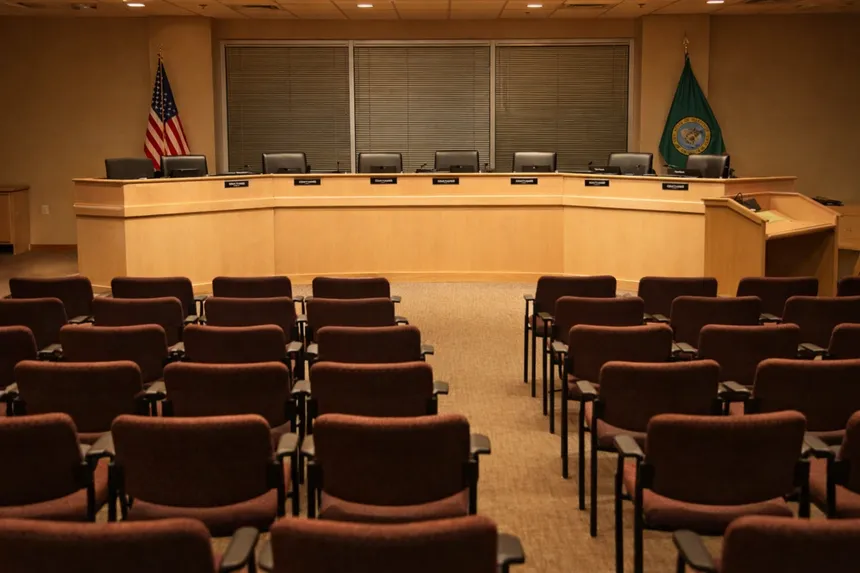
Newcastle put its Flock cameras in hibernation four months before the March 24 ICE arrest. Three council members replied to our questions about what happened and what comes next.
Editor's note, March 30, 2026: Updated to include a response from Councilmember Karin Frost Blakley (Position 5), received after initial publication.
Newcastle, WA – Three Newcastle City Council members have responded to questions from newcastle.lgbt about the city's Flock Safety cameras and the ICE detention reported on March 24. Their replies contain a significant correction to that coverage: Newcastle's cameras were placed in hibernation months before the arrest took place and played no role in it.
The Cameras Were Already Offline
Mayor Ariana Sherlock (Position 2) confirmed that all city-owned Flock Safety cameras were placed into hibernation mode on December 3, 2025, in response to liability risk concerns brought to the council. They have remained inactive since.
Our March 24 article stated that "Newcastle's cameras remain online." That was incorrect. The cameras had been dormant for more than three months at the time we published, and the question of whether they played a role in the morning's detention was moot before the article ran.
"Because the City's Flock cameras have been inactive since December 2025, they were not and could not have been utilized in connection with the March 24 arrest conducted by U.S. Immigration and Customs Enforcement." — Mayor Ariana Sherlock, Position 2
The council formalized its position on February 3, 2026, voting to approve a temporary moratorium on the placement, installation, and operation of ALPRs within city-owned public spaces and rights-of-way. A recording of that discussion is available on YouTube (beginning around the two-hour mark).
Council Member Chris Villaseñor (Position 4) confirmed the same picture. Public policy was not keeping pace with the technology, and standards needed to be raised. He said the council will review the program later in the year once the state has acted.
What Actually Happened on March 24
Sherlock's response also clarified what Newcastle Police Department did and did not do that morning. NPD was not involved in the arrest. Officers were notified after the fact and responded only to manage a traffic hazard: a vehicle connected to the incident was left blocking the roadway.
"An individual who was not arrested by ICE was left in possession of the vehicle and NPD assisted them in safely driving away." — Mayor Ariana Sherlock, Position 2
That account is consistent with KCSO's published policy under the Keep Washington Working Act, which limits deputy participation in federal immigration enforcement to situations involving public safety.
Both council members addressed the arrest itself. Villaseñor was direct:
"ICE action in our city is shocking and unwelcome." — Council Member Chris Villaseñor, Position 4
The council recently issued a statement in opposition to ICE detention facilities in the state.
What Remains Unresolved
The council's actions before March 24 are more substantial than our earlier coverage reflected. The hibernation decision and the moratorium preceded our reporting, not the reverse, and they deserve acknowledgment.
The questions raised in that article, however, have not all been answered. Newcastle's cameras were active from their installation through December 2, 2025. The University of Washington Center for Human Rights documented that federal agencies accessed Flock data in Washington during that same period, often without local police knowledge, through national lookup tools and federal pilot programs. Whether Newcastle's data was among the records accessed has not been publicly addressed.
The moratorium is also temporary by design. Sherlock described it as a holding measure while the council awaits SB 6002, the Driver Privacy Act, now pending the governor's signature, to clarify what state law requires. Further public discussions are planned on whether to renew the Flock contract, and the council has not yet decided.
A city-level ordinance, separate from KCSO policy, prohibiting the use of ALPR data for immigration enforcement has not been adopted. An independent audit of access logs from the period the cameras were active has not been announced.
Those discussions are coming. Sherlock has invited this publication to meet and discuss additional questions. We will follow up as the council's review proceeds.
Councilmember Blakley: The Moratorium Does Not Cover HOA Cameras
Councilmember Karin Frost Blakley (Position 5) also responded, confirming the same account: all city-owned Flock cameras entered hibernation on December 3, 2025, and the February 3, 2026 moratorium prohibits new ALPR installations on city-owned public spaces and rights-of-way.
Her response adds one detail not addressed in the prior replies. The moratorium applies only to city-operated systems. Homeowners associations within Newcastle city limits retain the ability to enter their own agreements with an ALPR vendor, independent of the city. Residents in HOA neighborhoods should not assume the moratorium covers cameras installed on HOA property.
On the March 24 detention, Blakley confirmed that NPD was notified after the fact and responded only to manage a traffic hazard. No additional individuals were detained and the vehicle was not impounded.
"I remain committed to carefully evaluating the policies and technologies that affect resident privacy and safety, and based upon discussions I have had with my other City Councilmembers and City staff, I am confident that they share that commitment." — Councilmember Karin Frost Blakley, Position 5
Blakley cited SB 6002 as a factor that will inform future council decisions on ALPR systems and other surveillance technologies, and welcomed continued engagement from residents.
Sources
- Newcastle City Council meeting, February 3, 2026 — council discussion on Flock Safety and ALPR moratorium (begins at approximately the two-hour mark)
- newcastle.lgbt: An ICE Detention Was Logged Under a Newcastle Flock Camera This Morning. The City Still Has No Independent Audit. — March 24, 2026
- Washington State Legislature: SB 6002, Driver Privacy Act
