A Riot, A Movement, An Erasure: The True History of Pride and Who Keeps Getting Written Out of It
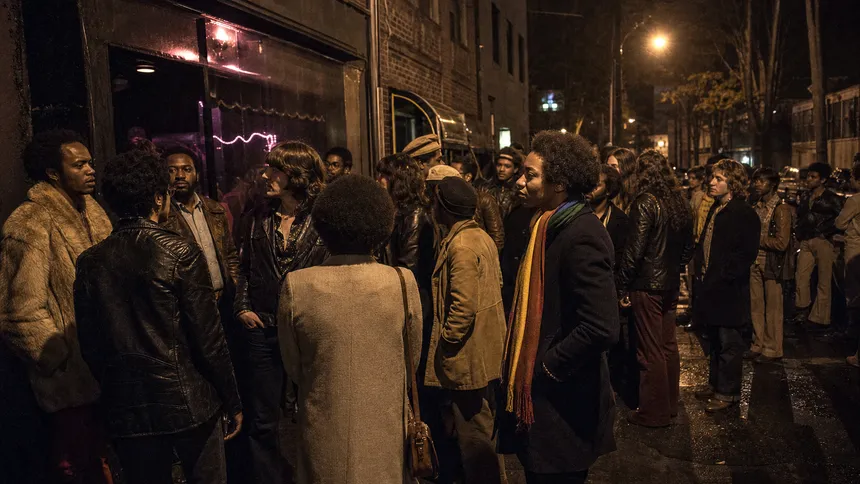
A crowd gathers on a narrow city street outside a lit bar at night in a scene evoking the 1969 Stonewall uprising.
Newcastle, WA – In the early morning hours of June 28, 1969, plainclothes New York City police officers raided the Stonewall Inn at 53 Christopher Street in Greenwich Village, and this time, the patrons fought back. The six-night uprising that followed helped ignite the modern LGBTQ+ rights movement. In the decades that followed, many of the LGBTQ+ organizations and public commemorations that movement produced marginalized the transgender people, drag performers, sex workers, and unhoused queer youth who helped sustain the uprising and build the organizations that came after it. This is a fact-checked look at what Pride was, who built it, how it was co-opted, and what is being undone right now.
The Night It Began
Police raids on gay bars were routine in 1960s New York: the Stonewall Inn had been raided on average once a month in the period leading up to that night, including one prior raid earlier that same week. What was different this time was what happened next.
The patrons did not submit to another routine act of police harassment. They did not scatter. They stayed.
The Stonewall Inn was run by the Mafia, one of many gay bars of that era controlled by organized crime because discriminatory liquor-licensing practices made it nearly impossible for a legitimate business to openly serve gay customers. It operated without a liquor license, a dark and crowded space with painted-black windows and two dance floors, a rarity that made it a gathering place for people excluded from many other social venues. Its regulars included gay men, lesbians, drag queens, transgender women, sex workers, and unhoused queer youth who slept in the back and panhandled on Christopher Street during the day. Many of them already faced homelessness, police harassment, and exclusion from mainstream institutions, conditions that made the raid part of a much larger pattern of state violence.
That night, approximately 200 people were inside. Officers lined them up and checked identification, following the familiar choreography of a raid. They released patrons whose clothing they considered "gender-appropriate" and detained people they classified as being in drag. Under a New York statute, anyone not wearing at least three articles of clothing matching their assigned sex at birth could be arrested. Women officers then took some detainees into bathrooms for invasive inspections intended to determine their sex. As the arrested were loaded into police vehicles, a crowd began forming outside.
Accounts of what ignited the riot vary, and historians remain careful about the specifics. What the available evidence suggests is that a woman in masculine attire, possibly Stormé DeLarverie, a biracial lesbian who performed as an emcee and drag king with the Jewel Box Revue, complained that her handcuffs were too tight. When an officer struck her, she called to the crowd to do something. They did. Coins and beer bottles were thrown. Tires were slashed. A parking meter was pried up and used as a battering ram. The original raiding party retreated inside the bar and barricaded themselves in. Reinforcements from the Tactical Patrol Force arrived in riot formation. Protesters circled around them through the side streets of the Village, coming up behind them from both directions.
The uprising lasted approximately six nights. In the accounts of historian David Carter, an initial "hierarchy of resistance" was led by young people living on the streets, unhoused queer youth who were among those most frequently subjected to police harassment and had the least access to institutional protection. Drag queens. Butches. Trans women. People whose gender expression, poverty, or public visibility made them especially vulnerable to policing and exclusion.
It is worth stating clearly what the Stonewall Uprising was not: it was not the beginning of LGBTQ+ resistance in America. Gay people had been organizing since the 1940s and 1950s, through groups like the Mattachine Society and the Daughters of Bilitis. There had been an uprising at Compton's Cafeteria in San Francisco in 1966, led by transgender sex workers, three years before Stonewall. What Stonewall did was ignite something at a moment in American history, amid the civil rights movement, the feminist movement, the anti-war movement, when the energy was already high and the desire to fight back had already been building for years. It catalyzed a movement that spread nationally within a year.
The People the History Books Keep Leaving Out
The popular memory of Stonewall has undergone significant revision over the decades, often centering white, cisgender gay men as the protagonists of the uprising while minimizing the participation and later organizing of Black and Brown transgender people, drag performers, sex workers, and unhoused youth.
Four figures in particular demand recognition.
Marsha P. Johnson was a Black trans woman, drag performer, and sex worker who had lived in New York's Greenwich Village since 1963. She was known throughout Christopher Street as generous to a fault, often giving away money she had earned through sex work or panhandling to people who needed it more than she did. She was 23 years old at the time of the Stonewall Uprising. It is important to be accurate here: Johnson herself stated in a later interview that she arrived at the Stonewall that night after the riot had already started. She was not one of the people who resisted the raid in its opening moments. But she was on the front lines within hours, and in the years that followed, she was one of the most visible and tireless advocates the movement had. Her trademark flower crowns and elaborate clothing made her highly visible at protests, marches, and vigils for the next two decades.
Sylvia Rivera was a trans woman of Puerto Rican and Venezuelan descent, born in New York City in 1951. Her mother died by suicide when Rivera was three years old. Raised by her grandmother, Rivera was beaten for gender-nonconforming behavior, attacked at school, and ran away from home at age eleven. She made her way to Times Square, where she survived through sex work and was eventually taken in by a community of drag queens who became her chosen family. She was seventeen when she met Marsha P. Johnson. Like Johnson, Rivera's exact role in the first moments of the Stonewall riot is disputed, some accounts place her elsewhere when the uprising began, but her role in what came after is not. Rivera became one of the most persistent and visible advocates for transgender liberation in the years after Stonewall. She repeatedly encountered exclusion from influential gay and lesbian organizations, including efforts by some organizers to keep her from speaking.
Stormé DeLarverie was a biracial lesbian, born in New Orleans on Christmas Eve 1920 to a Black mother and a white father. She had a baritone singing voice and spent years as the lone drag king and emcee for the Jewel Box Revue, North America's first racially integrated drag touring show. Multiple accounts credit her with playing a role in sparking the Stonewall crowd on the night of the uprising, though she was characteristically private about the specifics in her later years. What is documented is that she spent the decades after Stonewall working as a bouncer at lesbian bars in New York, protecting lesbian patrons and gathering places well into her eighties. She died in 2014 at age 93.
Miss Major Griffin-Gracy is a Black trans woman who was also at the Stonewall Inn the night of the uprising, where she was struck in the head by a police officer during the melee. She went on to become one of the longest-serving trans rights advocates in American history, eventually founding the House of GG, the Griffin-Gracy Educational Retreat and Historical Center, in Little Rock, Arkansas, a retreat and support space for the transgender community. Her life is documented in the award-winning 2015 documentary Major!
What They Built After
Within months of the uprising, gay rights organizations were forming across the country. The Gay Liberation Front launched in the immediate aftermath of Stonewall. The Gay Activists Alliance followed in December 1969. Within a year, Pride marches were taking place simultaneously in New York, Los Angeles, and Chicago on the first anniversary of the uprising, June 28, 1970. From there, they spread to San Francisco, Boston, Dallas, Milwaukee, London, Paris, West Berlin, and Stockholm.
But it was Johnson and Rivera who built something more immediate, more concrete, and more necessary than any march: a house.
In late 1970, the two women founded STAR, Street Transvestite Action Revolutionaries, a name reflecting the terminology activists used at the time; "transvestite" is now widely considered an outdated and inappropriate general label, though it remains the organization's historical name. Shortly after, they opened STAR House. The organization had begun, in its most embryonic form, as a shelter inside a semi-truck trailer parked in a Greenwich Village lot, where Johnson and Rivera housed roughly twenty unhoused transgender youth. They covered its costs through sex work, panhandling, and other survival income. When truck drivers towed the trailer away one day while they were absent, with one of the youth still inside, who ended up accidentally transported to California, Johnson and Rivera secured a four-room apartment at 213 East Second Street in the East Village. STAR House opened officially in November 1970.
It was the first LGBT youth shelter in the United States. It was the first organization in the country led by trans women of color. Johnson and Rivera paid the $200 monthly rent themselves, through sex work, while ensuring that the young people who lived there did not have to. They provided food, clothing, shelter. They assumed a parental role, the house mothers, in the language of the ballroom community they were part of, for young people who had been rejected by families, institutions, and existing service systems.
STAR House lasted until 1971, when the group was evicted. A later iteration existed briefly, but the organization's formal life was short. Its legacy, however, was not: it influenced later transgender-led shelter, housing, and mutual-aid programs.
How the Movement Pushed Out Its Founders
The years after Stonewall brought repeated exclusion of trans people, particularly trans women of color, often defended by movement leaders as a politically pragmatic path to mainstream acceptance.
The dynamic is documented across academic, journalistic, and archival sources, including by the Library of Congress. As the gay rights movement grew and professionalized in the early 1970s, the push toward mainstream acceptability created pressure to distance the movement from its most visible, most radical, most gender-nonconforming participants. The people most visible in the uprising were also among those whom mainstream political organizations considered least acceptable to the broader public. The calculus was brutal and explicit: transgender women, drag performers, and people then described as "street queens" were treated by some movement leaders as giving gay liberation "a bad name."
The Gay Activists Alliance, one of the most prominent post-Stonewall organizations, effectively excluded trans people from its agenda and its spaces. Marsha P. Johnson and Sylvia Rivera attended GAA meetings and were frequently the only people in drag and among the only people of color present. Meeting practices and the conduct of other members reportedly made Johnson and Rivera feel unwelcome. Similar patterns repeated in gay rights organizations across the country.
The symbolic peak of this rupture came on June 24, 1973, four years after Stonewall, at the Christopher Street Liberation Day Rally in Washington Square Park, the event that would evolve into what we now call Pride. Sylvia Rivera had been scheduled to speak. When she arrived at the stage, she found a contingent of organizers and attendees actively trying to block her access to the microphone. She had to physically fight her way onto the stage.
When she reached the microphone, she was met with boos, jeers, and shouts from the crowd. She held her ground. What followed became one of the most documented speeches in LGBTQ+ history, known by its first line: "Y'all better quiet down."
Standing on that stage, Rivera called out the crowd directly. She described gay brothers and sisters writing to her from jail every week, asking for help. She described being beaten, having her nose broken, being thrown in jail, losing her job and her apartment, all for gay liberation. She demanded to know why the movement she helped build refused to protect incarcerated queer people, unhoused queer people, trans people of color who had nothing and were fighting for everyone else's freedom.
The crowd initially booed. Then it shifted. By the end, Rivera had the audience chanting "gay power" with her. But the damage to her was real. She later described the experience as a breaking point. She stepped away from activism for nearly two decades.
She had to fight to be heard at a commemoration rooted in an uprising she had helped sustain and a movement she had spent years organizing within.
The exclusion continued well past 1973. The 1993 March on Washington for Lesbian, Gay, and Bi Equal Rights and Liberation did not include "transgender" in its title. The 1994 International March on the United Nations, held in New York to mark the 25th anniversary of Stonewall, also omitted the word. Trans people and their advocates fought repeatedly to be included in legislative protections, anti-discrimination bills, hate crime statutes, and were repeatedly told that their inclusion would make the bills "too difficult" to pass.
This is not ancient history. It is the context in which everything that follows has to be understood.
A Riot Becomes a Parade Becomes a Brand
The corporatization of Pride did not happen overnight. Through the 1980s, Pride marches retained much of their character as protest: the AIDS crisis, and the federal government's documented neglect and hostility toward those affected by it, made sure of that. ACT UP and Queer Nation brought confrontational protest and direct action back into the streets. The atmosphere was one of grief and fury, not celebration.
But as the 1990s progressed and the legal and cultural landscape began to shift, corporations identified a market. Advertisers increasingly treated LGBTQ+ people as a distinct consumer market, often emphasizing wealthier white gay and lesbian consumers while overlooking poverty within the broader community. Absolut Vodka had been advertising in gay publications since 1981. Subaru ran a famously coded marketing campaign in the 1990s aimed at lesbian consumers. By the early 2000s, corporate presence at Pride events was routine. By the 2010s, it was dominant.
Bank floats. Insurance company banners. Tech company sponsorships. The rainbow logo, reissued every June and retired every July 1st.
The contradiction within some corporate Pride campaigns is documented in political contribution records. Research published by OpenSecrets in 2024 found that Delta Air Lines, a prominent Pride sponsor in multiple cities, directed more than $300,000 through its PAC to Republican candidates, including politicians with records of opposing LGBTQ+ legislation. MasterCard, another regular Pride sponsor, directed more than $100,000 to Republican candidates who voted against the Respect for Marriage Act in 2022. Data for Progress found that companies including AT&T, Comcast, Blue Cross Blue Shield, Disney, Home Depot, Lowe's, and State Farm, all of which have participated in Pride sponsorships, simultaneously funded politicians sponsoring anti-LGBTQ+ legislation.
The rainbow logo is not evidence of support. It is, in many documented cases, a marketing strategy running alongside political donations that work against the community the logo claims to celebrate. The most marginalized members of that community, trans women of color, unhoused queer youth, sex workers, incarcerated LGBTQ+ people, receive the least benefit from corporate Pride, and face the sharpest consequences from elected officials and candidates receiving contributions from those corporations or their political action committees.
The Erasure in Real Time
The images circulating this Pride season that prompted this investigation focus primarily on historical erasure. But the erasure being documented now is not only historical. It is governmental, systematic, and ongoing.
February 2025: The Stonewall National Monument Website
The National Park Service, which oversees the Stonewall National Monument in Greenwich Village, designated by President Barack Obama in 2016 as the first U.S. national monument dedicated to LGBTQ+ rights and history, removed all references to transgender and queer people from its website. The word "transgender" was deleted from the text. The word "queer" was deleted. The acronym "LGBTQ+" was replaced throughout with "LGB." Where the website had previously stated that the Stonewall Uprising sparked momentum for "the LGBTQ+ civil rights movement," it now read "the LGB civil rights movement."
This happened in February 2025, within weeks of Trump's second inauguration, pursuant to an executive order titled "Defending Women From Gender Ideology Extremism and Restoring Biological Truth to the Federal Government," which directed federal agencies to recognize only male and female as sexes and to remove content inconsistent with that framework.
The Stonewall Inn co-owners and the Stonewall Inn Gives Back Initiative responded in a joint statement calling it "a blatant act of erasure" that "distorts the truth of our history" and "dishonors the immense contributions of transgender individuals, especially transgender women of color, who were at the forefront of the Stonewall Riots." Senate Minority Leader Chuck Schumer called it "cruel, pathetic, and historically inaccurate."
February 2026: The Pride Flag
On or around February 10, 2026, the National Park Service removed the large Pride flag from the flagpole at the Stonewall National Monument. The removal was made pursuant to a Department of Interior directive stating that only the U.S. flag and congressionally authorized flags could be flown on NPS flagpoles. Local elected officials, including Manhattan Borough President Brad Hoylman-Sigal and New York City Mayor Zohran Mamdani, responded with immediate condemnation. Protesters gathered at the site. Within days, local and state officials raised the flag again in an unofficial capacity.
Three civil rights organizations filed suit. In April 2026, the Trump administration agreed to a settlement requiring the Pride flag to be restored to the monument. The flag is back. But the removal happened, and it happened at the site built to honor the people the administration had already spent a year erasing from the history books.
The Broader Picture: CDC, NIH, HHS, and the VA
The Stonewall website is the most symbolically charged target, but it is far from the only one. The scope of what was removed from federal websites in 2025 is substantially larger than the images in circulation acknowledge.
Following Trump's executive order, the CDC was directed to remove from its websites, internal reports, and manuscripts submitted for peer review the following terms: gender, transgender, pregnant person, LGBT, transsexual, non-binary, nonbinary, assigned male at birth, assigned female at birth. CDC pages covering LGBTQ+ youth health were taken down. HIV-related pages were caught in the sweep and temporarily removed. The CDC's Youth Risk Behavior Surveillance System, the nation's largest monitoring program for health-related behaviors among high schoolers, which had for the first time asked about transgender identity, was taken offline. The National Institutes of Health terminated hundreds of active research grants touching on gender, LGBTQ+ health, health equity, and DEI. The NIH Office of Sexual and Gender Minority Research's website disappeared.
The Department of Veterans Affairs removed references to transgender veterans from its suicide prevention strategy, despite the VA's own research documenting that transgender veterans face significantly elevated suicide risk compared to both the general veteran population and the general public.
The Department of Health and Human Services made an attempt to scrub its own websites of trans references, including the CDC's. That effort was halted by a federal court order. Some pages were restored. Others were not. Some restored pages included administration language rejecting or refusing to recognize transgender identities.
Historians consulted by NPR noted that this kind of systematic erasure from official government records and health infrastructure has historical precedent, and that precedent is not comforting.
What This Means
The images circulating online this Pride month are largely accurate. The history they describe is documented. The critique of corporate co-optation is supported by political donation data. The narrative of trans women being pushed out of the movement they helped build is confirmed by the Library of Congress, by academic historians, by the people who were there.
A few points deserve precision. The claim that the Stonewall Inn was raided "four times that week" is an exaggeration: the documented record shows one prior raid that week, with a broader pattern of roughly monthly raids in the period leading up to June 28. The claim that the movement was taken over specifically by "white gay men" is accurate in broad strokes, but exclusion of trans people also came from some lesbian organizers and organizations that supported policies or event decisions excluding transgender participants. The claim that Marsha P. Johnson "threw the first brick," a piece of mythology that circulates widely, is not supported by the historical record; Johnson herself said she arrived after the riot had already begun. These are not reasons to dismiss the larger narrative. They are reasons to get the details right so the larger narrative can be defended.
The larger narrative is this: Transgender people, drag performers, unhoused queer youth, and sex workers participated in the Stonewall Uprising and helped build organizations in its aftermath. They had homes, relationships, safety, and futures to protect, and they resisted anyway. Within years, influential parts of the gay and lesbian rights movement pushed many of them to the margins. Their contributions were minimized in public commemorations. Their priorities were repeatedly treated as obstacles to mainstream acceptance. Sylvia Rivera was booed at a Pride rally.
Similar exclusion is now being carried out through federal policy, website changes, and restrictions on public-health information. Transgender people are being removed from official accounts of history, denied recognition within federal institutions, and excluded from resources intended to protect their health and safety.
A riot became a march. The march became a parade. The parade attracted corporate sponsors. Now some of the people who resisted the Stonewall raid and organized in its aftermath are again being written out of the history they helped shape.
This is not a new story. What is new is the speed, reach, and institutional authority behind the current effort.
Sources
- National Park Service
- Library of Congress
- Encyclopaedia Britannica
- NPR
- CNN
- NBC News
- CBS News
- The Advocate
- OpenSecrets
- Data for Progress
- National Women's History Museum
- KQED
- The Nation
- Verso Books
- Village Preservation
- Vice
- STAR House historical records
- Martin Duberman, Stonewall
- Susan Stryker, Transgender History
- Recorded testimony from Sylvia Rivera, Marsha P. Johnson, Miss Major Griffin-Gracy, and other Stonewall veterans
