Hate Mail in Newcastle: What Happened, Why It Matters, and How We Respond
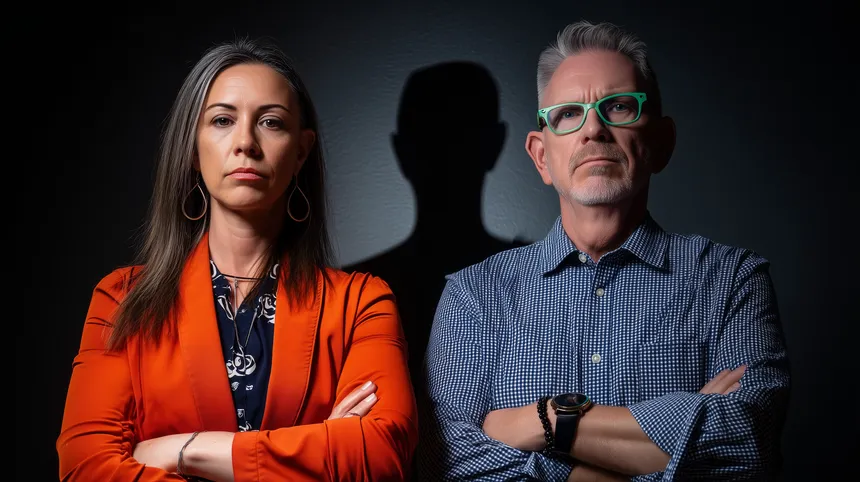
Police linked hateful mail sent to Councilmember Ariana Sherlock and candidate Andy Jacobs to an alleged single source, prompting protection orders and a community push for safety, accountability, and inclusion.
Newcastle, WA – Two local leaders were targeted by hateful mail this year, and police later told them both mailings were traced to the same source. The episodes have shaken trust, raised urgent safety questions, and forced a sober look at how our institutions respond to bias and intimidation.
What happened
Councilmember Ariana Sherlock and council candidate Andy Jacobs were each sent anonymous mail containing hateful, targeted content. Sherlock received a typed letter laced with derogatory and bias-motivated language, which she opened at her home. Jacobs was mailed a copy of a community magazine cover featuring him and his family, which had been defaced with hateful graffiti. Both incidents were reported to law enforcement and are described in court records and media reporting as acts of personal harassment based on identity and public service. Newcastle’s police services are provided by the King County Sheriff’s Office (KCSO), which conducted the investigation.
Who was identified
According to Sherlock and Jacobs, a KCSO detective later informed them that Steve Tallman, a former Newcastle councilmember, had been identified as the alleged sender of both mailings. The Seattle Times confirmed that police attributed the conduct to Tallman. His name appears in official filings in King County Superior Court, where both recipients filed civil Anti-Harassment Protection Orders against him. Tallman’s attorney, when contacted by the Times, declined to comment. No criminal charges have been filed, and no legal finding of guilt has been made. We are not making any legal conclusions here.
Immediate safety steps
Sherlock and Jacobs each obtained civil Anti-Harassment Protection Orders in September 2025, which were finalized in mid-October. The final court orders barred Tallman from contact or proximity to the petitioners and included a standard Order to Surrender Weapons. According to court documents cited by the Times, Tallman surrendered eight firearms to KCSO deputies. The orders were served without incident.
Where the legal process stands
As of October 15, no public charging decision had been announced. The King County Prosecuting Attorney’s Office (PAO) is reviewing the matter. According to Washington state law, felony hate crimes require proof of both bias motivation and a qualifying act, such as a threat, physical harm, or property damage. If prosecutors find the conduct does not meet those criteria, misdemeanor harassment could potentially be pursued instead through Mercer Island Municipal Court, which contracts with Newcastle. This legal distinction explains why civil protection orders may be the most immediate safeguard even when criminal decisions are pending.
Patterns and concerns
This is not happening in a vacuum. Newcastle has experienced a series of highly visible political and cultural disputes in recent years, particularly around LGBTQ+ inclusion. Incidents like these have a chilling effect, not only on the individuals involved, but on anyone in the community who sees what happens when public service is met with intimidation. The legal documents in this case reflect both the seriousness of the conduct and the current limits of the criminal code when threats are not explicit.
Community implications
Safety goes beyond what courts can order. It includes how neighbors respond to harassment, and whether institutions show consistency in upholding standards of inclusion and accountability. In this case, the record shows that Sherlock and Jacobs took action through formal channels, and those actions were affirmed by the court. But civil protections are only part of the solution. Sustained community response, transparency in public records, and visible solidarity remain crucial to countering fear and disinformation.
What solidarity looks like right now
- Back people who are targeted. Reach out. Show up at meetings. Make sure they do not face this alone.
- Keep attention on process. Ask for updates on records, dockets, and next steps so facts lead the conversation.
- Build a culture of zero tolerance for hate in civic life. Campaigns and public comment should be tough, never dehumanizing.
- Know the tools. Civil protection orders and weapon surrender rules exist for a reason. Use them, respect them, and track outcomes.
Bottom line
Newcastle can be a place where public service is safe, elections are about ideas, and neighbors trust that bias will be met with accountability. These incidents are a test of whether we will do the routine, sometimes unglamorous work of documentation, due process, and community care. Let’s pass that test together.
Sources:
- King County Superior Court records. Andy Jacobs v. Steve Tallman, No. 25-2-28973-7 KNT; Ariana Sherlock v. Steve Tallman, No. 25-2-29005-1 KNT
- King County Superior Court calendar (October 2025): https://cdn.kingcounty.gov/-/media/king-county/depts/superior-court/documents/calendars/virtual-family-hearings/fl-zoom-calendar-am.pdf
- The Seattle Times, October 14, 2025. “Eastside council member and candidate receive hateful mail, speak out”
- King County Prosecuting Attorney’s Office blog. “KCPAO in the News: October 6–October 15, 2025”
- RCW 9A.36.080. Hate crime offense definition: https://app.leg.wa.gov/rcw/default.aspx?cite=9A.36.080
- RCW 9A.46.020. Criminal harassment statute: https://law.justia.com/codes/washington/2005/title9a/9a.46.020.html
- King County Sheriff’s Office public disclosure and jurisdiction info
- Newcastle LGBTQ Voice, September 22, 2025. “Newcastle’s City Council Election: Exposing Candidate Ties and Impacts”
- Allegation-to-Evidence Matrix. Internal reference document summarizing court filings, statements, and investigative steps.
