International Non-Binary People's Day: History, Significance, and the Road Ahead
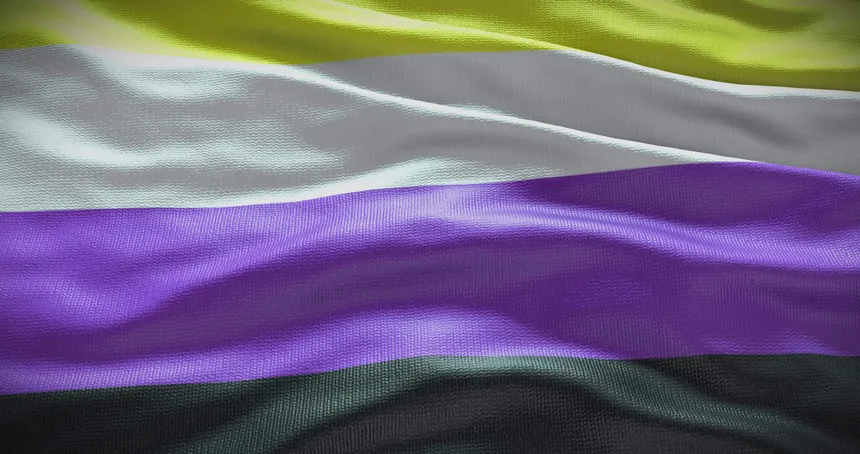
Non-binary pride flag with horizontal stripes of yellow, white, purple, and black
Newcastle, WA – International Non-Binary People's Day is observed each year on July 14 to celebrate and uplift individuals whose gender identity exists outside the traditional male-female binary. Around the globe- and here in the United States-non-binary people and their allies mark this day with visibility campaigns, educational events, and calls to action. Though strides have been made in recognition and rights, non-binary communities continue to face legal, social, and political challenges. In this feature, we explore the day's origins, its significance both worldwide and in the U.S., the obstacles non-binary people still encounter, why the observance remains crucial in 2025, and concrete ways Newcastle residents and organizations can show their support.
Origins and History
The first International Non-Binary People's Day took place on July 14, 2012, after Canadian writer and non-binary activist Katje van Loon proposed a date precisely halfway between International Women's Day (March 8) and International Men's Day (November 19). This positioning was deliberate: to shine a spotlight on those who don't identify strictly as women or men. Since 2012, LGBTQ+ organizations worldwide have marked July 14 as the centerpiece of Non-Binary Awareness Week-using the occasion to celebrate non-binary histories, educate the public about gender diversity, and advocate for policy change.
Global and U.S. Significance
International Non-Binary People's Day carries a dual mission of celebration and awareness around the world. LGBTQ+ organizations, workplace‐inclusion networks and community groups host panels, social-media campaigns and meet-ups to affirm non-binary lives and push for legal reforms-whether that's non-binary options on government forms, inclusive workplace policies or more visibility in media and education.
In the United States, non-binary milestones have been bittersweet. The U.S. Department of State introduced an "X" gender marker for federal passports on April 11, 2022, yet those applications were abruptly suspended on January 23, 2025 under a new executive order. At the same time, 22 states plus D.C. allow residents to select a non-binary "X" option on driver's licenses or state IDs}-even as a handful of jurisdictions, like Arkansas, have rolled back their X-marker policies in 2024.
Despite these advances in recognition, non-binary Americans confront a rising tide of anti-trans legislation at the state level. In 2023 alone, state legislators introduced over 520 anti-LGBTQ+ bills-a record number-with more than 220 explicitly targeting transgender and non-binary people (including bans on gender-affirming care for minors and measures requiring or authorizing misgendering of students).
This complex landscape-official inclusion on some documents alongside aggressive state-level rollbacks and bans-underscores why International Non-Binary People's Day remains a vital moment to celebrate hard-won visibility, demand legal protections, and spotlight the work still needed to secure full equality.
Challenges Faced by Non-Binary People
Despite growing visibility, non-binary people encounter significant hurdles:
- Legal barriers: Only about 18 countries worldwide currently offer third-gender or non-binary markers on official documents. In most places, non-binary identities remain legally invisible.
- Social stigma and violence: In countries with "anti-propaganda" laws (e.g., Russia, Uganda), non-binary advocacy can be criminalized, driving many to hide their identities. Even in more accepting societies, non-binary people-especially those of color-face disproportionate harassment and violence.
- Healthcare access: Medical systems built around a gender binary can deny or delay gender-affirming care. Recent U.S. state bans on trans healthcare for minors have also threatened necessary treatments for non-binary youth.
- Mental health risks: High rates of depression and suicidal ideation stem not from non-binary identity itself but from societal rejection. Studies show over 90 percent of non-binary adults have contemplated suicide, and roughly 40 percent have attempted it.
Why the Day Remains Critically Important in 2025
Progress in visibility and legal recognition is fragile-and often met with backlash. The record wave of anti-LGBTQ+ bills introduced in U.S. states, combined with international crackdowns on gender-diverse expression, makes International Non-Binary People's Day more than a celebration-it's a clarion call for solidarity and action. Each July 14 sends a lifesaving message to non-binary people: you are seen, you are valid, and you are not alone. It also challenges policymakers, educators, healthcare providers, and community leaders to deliver on promises of inclusion.
How To Support Non-Binary People in Newcastle
Individuals:
- Learn and use correct names and pronouns-introduce your own pronouns to normalize the practice.
- Speak up against misgendering and anti-non-binary remarks in social settings.
- Amplify non-binary voices by sharing their art, writing, and stories.
Educators & Schools:
- Adopt gender-inclusive language in lesson plans and class addresses (e.g., "students" instead of "boys and girls").
- Update anti-bullying policies to explicitly protect gender-diverse students.
- Provide professional development on supporting non-binary youth.
Workplaces & Institutions:
- Offer open-ended or "X" gender options on forms and databases.
- Ensure healthcare plans cover gender-affirming services for all employees.
- Create gender-neutral restroom facilities and revise dress codes to be non-gendered.
Community & Policy:
- Host local panels, workshops, and library displays about non-binary identities around July 14.
- Advocate at city council meetings for inclusive policies (e.g., gender-neutral facilities in public buildings).
- Support non-binary-led organizations through donations, volunteering, or patronage.
As one community leader puts it, "Nothing about us without us." International Non-Binary People's Day is both a celebration and a moment of reckoning-an invitation for everyone in Newcastle to learn, reflect, and recommit to gender justice. Our city's strength lies in its diversity; honoring non-binary lives enriches us all.
