Newcastle Pride Flag Debate: A Victory Amidst Missed Opportunities.
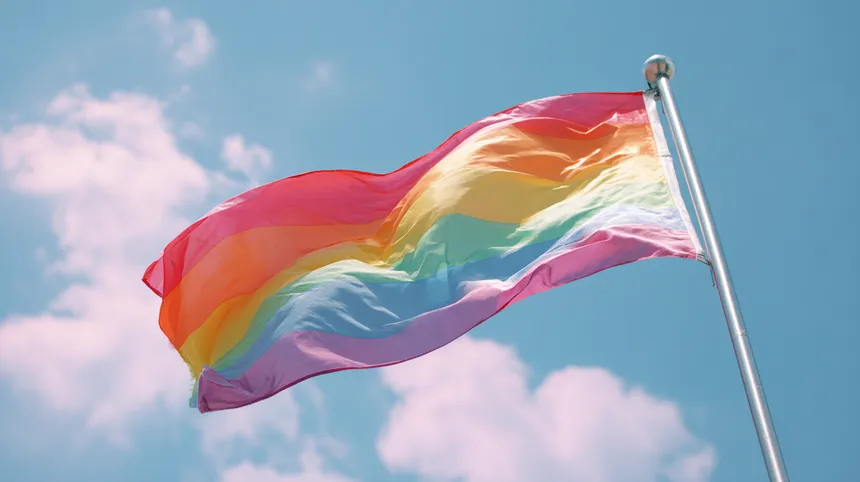
A deep dive into Newcastle’s Pride flag debate, exploring flawed opposition arguments and the significance of LGBTQ+ visibility.
Newcastle, WA – The recent Newcastle City Council debate over raising the Pride flag exposed deep-seated tensions in the community regarding LGBTQ+ representation, inclusion, and government responsibility. Though the resolution passed by a narrow margin, the contentious discussion revealed not only a misunderstanding of statistical representation but also a reluctance to fully embrace the significance of LGBTQ+ visibility in fostering a safer, more welcoming community.
Background
Raising the Pride flag is a powerful symbolic gesture that acknowledges the long-standing struggles and ongoing discrimination faced by LGBTQ+ individuals. From the Stonewall uprising in 1969, which ignited the modern LGBTQ+ rights movement, to the 2015 Supreme Court ruling in Obergefell v. Hodges that affirmed marriage equality, each step forward has been hard-won. The Pride flag itself stands as a beacon of hope and inclusivity, a message to LGBTQ+ youth and adults alike that they are valued, seen, and protected.
Research consistently shows that LGBTQ+ youth in accepting communities are less than half as likely to attempt suicide as those in unaccepting communities (Carson, 2018; Price & Green, 2021). Thus, raising the Pride flag is more than a symbolic gesture; it’s an act of community care and a statement of belonging that has tangible mental health benefits.
Key Points from the Meeting
Supporters of the Pride flag, like Councilmembers Arianna Sherlock and Sun Bufford, emphasized the importance of fostering an inclusive community where all residents feel welcome. Councilmember Paul Charbonneau reinforced this by highlighting the link between LGBTQ+ visibility and improved mental health outcomes, urging the council to recognize the power of symbolic acts in shaping community culture.
In contrast, Councilmember Tom Griffin focused on a misleading numerical analysis. Citing 190 emails from residents, 118 opposing the flag and 72 supporting, Griffin claimed this represented the overall sentiment of Newcastle residents. However, his analysis disregarded the basic principles of statistics: a reliable sample size for a population of approximately 13,000 would require at least 1,000 randomly selected respondents for a 3% margin of error at a 95% confidence level. Griffin’s reliance on a self-selected, non-random sample fails to meet any reasonable standard of statistical significance, undermining his argument and marginalizing LGBTQ+ voices.
Mayor Robert Clark also opposed the resolution, arguing that the American flag represents all citizens and questioning why other cultural observances, such as Black History Month or Women’s History Month, were not similarly recognized. This argument presents a false equivalence: LGBTQ+ individuals face unique, ongoing discrimination that the Pride flag helps address, making it a necessary and distinct symbol of inclusion.
It’s important to note that Councilmember Jim Quigg, who did not actively participate in the debate, ultimately voted against raising the Pride flag. While his silence during the discussion may have surprised some, it disappointed many who expected more inclusive leadership from him after his appointment to replace Steve Tallman last year.
Critical Analysis
The arguments against the Pride flag are built on logical fallacies: Griffin’s hasty generalization, Clark’s false equivalence, and slippery slope fears that supporting one group obligates the city to support every other cause. These flawed arguments fail to recognize the importance of affirming the dignity and safety of marginalized communities.
Griffin’s dismissive stance, labeling the Pride flag a “social problem” outside of city business, ignores the direct connection between representation, mental health, and civic responsibility. Clark’s insistence that the American flag is sufficient disregards the lived experiences of LGBTQ+ residents who have long felt excluded from full participation in civic life. Inclusivity is not about erasing existing symbols; it’s about ensuring that every resident feels recognized and valued.
Conclusion
While the decision to raise the Pride flag was ultimately correct, the narrow vote and the flawed arguments against it demonstrate that Newcastle has a long way to go in fostering true inclusivity. Symbolic acts like raising the Pride flag matter deeply, they acknowledge historical injustices, signal community support, and have real-world impacts on mental health and belonging. Newcastle’s leaders must move beyond mere symbolism to create policies and practices that truly embrace all residents, ensuring no one feels left behind.
Bibliography
- Carson, J. (2018). Greater suicide in LGBT youth. Nature Human Behaviour, 2(12), 886. https://doi.org/10.1038/s41562-018-0472-7
- Price, M. N., & Green, A. E. (2021). Association of Gender Identity Acceptance with Fewer Suicide Attempts Among Transgender and Nonbinary Youth. Transgender Health, 8(1), 56–63. https://doi.org/10.1089/trgh.2021.0079
