Transgender Day of Visibility 2025: Honoring Lives, Uplifting Voices.
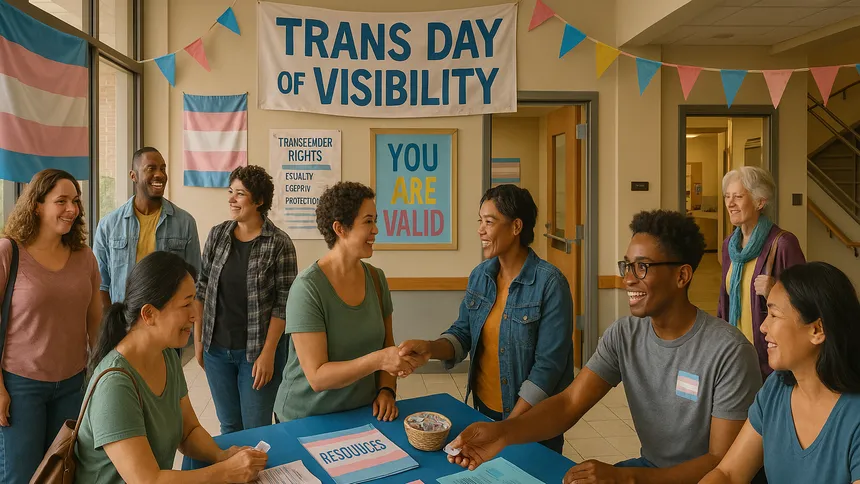
A welcoming community center lobby decorated with trans flags and posters hosts volunteers and attendees engaging in a daytime celebration.
Newcastle, WA – March 31 marks International Transgender Day of Visibility (TDOV), an annual celebration of the lives, contributions, and resilience of transgender and non-binary people. Founded in 2009 by transgender activist Rachel Crandall-Crocker, TDOV stands as a joyful counterpart to Transgender Day of Remembrance, shifting focus from mourning the lives lost to honoring those who are living, thriving, and fighting for equity.
The Dual Purpose of TDOV
TDOV carries a vital twofold mission:
- To celebrate the achievements, strength, and visibility of transgender individuals.
- To shine a light on the discrimination, economic hardship, and violence that still disproportionately impact the community.
While there have been strides in public awareness and legal protections, the reality remains harsh. According to a 2022 survey by the Center for American Progress and the Williams Institute, 70% of transgender people reported experiencing workplace discrimination or harassment in just the past year.
The Current Climate: A Surge in Anti-Trans Hostility
The past few years have seen an unprecedented wave of anti-trans legislation. In 2023, more than 550 anti-trans bills were introduced across U.S. state legislatures, many aimed at restricting access to healthcare, bathrooms, sports, and education for trans youth and adults alike (Teen Vogue). These attacks aren’t just political, they’re personal. They foster fear, fuel misinformation, and threaten to strip away hard-won rights.
Violence continues to be a devastating reality. In 2024, at least 36 transgender and gender-expansive individuals were killed in the U.S., with Black transgender women accounting for 61% of those fatalities (Human Rights Campaign). This sobering statistic lays bare the intersectional dangers faced by trans people of color, and the urgent need for societal and systemic change.
Why Visibility Matters
In a climate of fear and misinformation, visibility is resistance. TDOV is more than a celebration, it's a powerful act of defiance against erasure. When transgender people are seen, heard, and celebrated, we challenge the false narratives used to justify discrimination.
Community, too, is a lifeline. For trans youth and adults alike, finding chosen family, affirming spaces, and support networks can mean the difference between despair and hope.
How to Be an Ally, Every Day
Allies have an essential role in creating a safer, more inclusive world. Here are a few meaningful ways to show up:
- Educate yourself: Learn about trans history, issues, and terminology.
- Listen and amplify: Center transgender voices in conversations, media, and movements.
- Challenge transphobia: Speak out against discriminatory comments, policies, and legislation.
- Support organizations like GLAAD, Transgender Law Center, and Human Rights Campaign that are doing the work every day.
Both GLAAD and HRC offer downloadable allyship guides and action checklists to help you start or strengthen your commitment.
Join the Movement: TDOV 2025 Events
Across the U.S., and likely here in Washington State, TDOV will be marked by marches, community gatherings, art exhibits, storytelling circles, and online events. GLAAD and HRC maintain updated calendars of events happening nationwide and locally, check them out to get involved.
If you're organizing an event in your town or want to help amplify one in your area, let’s connect.
A Call to Action
On this Transgender Day of Visibility, let us celebrate the strength, joy, and diversity of trans and non-binary people, not just today, but every day. Let us also acknowledge the continued fight for dignity, safety, and justice.
Because trans people don’t just deserve to exist, they deserve to thrive.
If you or someone you know is in crisis, support is available 24/7 through the 988 Suicide & Crisis Lifeline.
Together, we can build a world where everyone has the freedom to live openly, authentically, and without fear.
