Newcastle Mayor’s Attack on Climate and Equity Policies Undermines Facts and Public Interest.
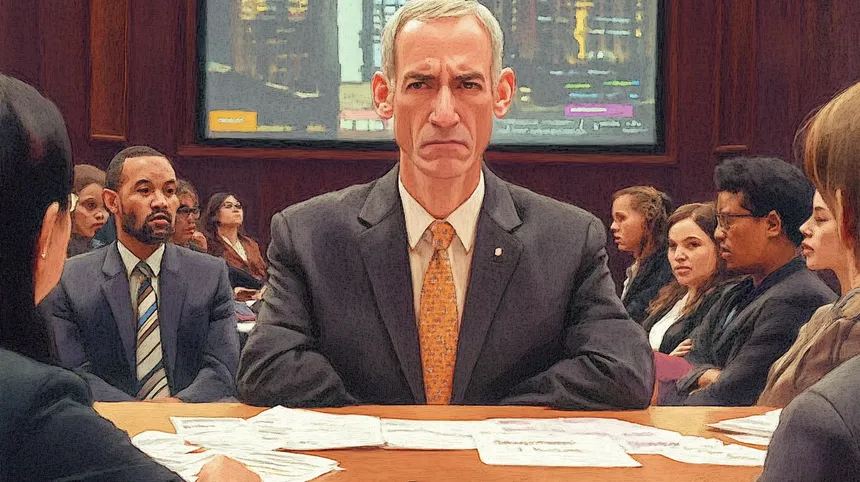
Newcastle Mayor Robert Clark is leading an effort to strip climate and equity policies from the city's Comprehensive Plan, using misinformation, right-wing rhetoric, and historical erasure, making it critical for residents to elect science-driven, socially responsible leaders in 2025.
Newcastle, WA – In a troubling display of political maneuvering, Newcastle Mayor Robert Clark is leading an effort to strip climate change and equity policies from the city’s Comprehensive Plan. By dismissing well-established scientific and social realities as “subjective” or “irrelevant,” Clark is engaging in a pattern of misinformation and obstructionism that threatens both the city’s future and its legal standing.
Climate Change Denial Masquerading as Policy
Clark’s rejection of climate change policies relies on a common right-wing rhetorical tactic: feigned confusion. “The climate is always changing. What are you going to mitigate? The hot days or the cold days and how do you do it?” he wrote, mocking a policy aimed at mitigating climate change impacts on vulnerable communities. This argument is disingenuous at best. Scientific consensus has long established that climate change is driven by human activity, leading to extreme weather events, rising temperatures, and environmental instability. Pretending not to understand the distinction between natural climate variations and human-caused climate change is a transparent attempt to avoid responsibility.
Moreover, Clark’s push to remove policies that call for regional collaboration on climate resilience ignores the interconnected nature of environmental issues. Newcastle does not exist in isolation, its planning decisions affect and are affected by broader regional and global climate patterns. By rejecting these policies, Clark is signaling a refusal to participate in evidence-based governance.
Equity and Inclusion Are Not “Personal Choices”
Clark’s opposition to language acknowledging and empowering diverse communities is equally troubling. His claim that “Everybody is already welcome in Newcastle and the level of involvement of any group or individual is a personal choice” dismisses well-documented historical and systemic barriers to inclusion. Equity policies are not about special treatment; they are about ensuring fair access to opportunities and resources. His stance echoes the long-standing conservative argument that systemic inequities do not exist, despite overwhelming evidence to the contrary.
His response to acknowledging Indigenous contributions is particularly revealing. By questioning “who decides what programs or policies and what acknowledgment looks like,” Clark implies that addressing historical injustices is either unnecessary or arbitrary. This line of reasoning minimizes the importance of historical context and ongoing disparities that equity policies seek to address.
Historical Erasure and the Whitewashing of Newcastle’s Past
Clark’s attempt to rewrite Newcastle’s history is another glaring example of manipulation. Despite a city report acknowledging that nearby areas developed by the same landowners had racially restrictive covenants, Clark insisted that Newcastle itself has never had any discriminatory practices. His assertion that “no such discrimination currently exists or has existed since Newcastle was established in 1994” is a deliberate oversimplification.
Discriminatory housing policies were often regional, affecting entire metropolitan areas, not just individual cities. The fact that Newcastle was incorporated in 1994 does not erase the racialized housing patterns that shaped the region. Clark’s push to add language that portrays Newcastle as free of historical discrimination is not about accuracy, it’s about absolution and avoidance of accountability.
Right-Wing Manipulation of Science and Policy
Clark and his allies on the Newcastle Planning Commission took their ideological war against progress further by removing references to protecting renters and using the “best available science” in city planning. One particularly egregious comment in the adopted language reads: “Best Science? Biology is a science that maintains there are 2 genders, male and female. However, social justice warriors ingnore sic the science they don’t like.” This statement not only misrepresents the purpose of “best available science” policies, which generally refer to environmental and planning research, but also promotes transphobic misinformation.
Scientific fields, including biology, medicine, and psychology, recognize that gender is a spectrum and not a strict binary. Clark’s attempt to inject anti-LGBTQ rhetoric into city planning is both inappropriate and factually incorrect. It also reflects a broader right-wing trend of distorting scientific discourse to fit ideological and religious narratives, using selective interpretations to justify exclusionary policies.
Ignoring Legal and Ethical Responsibilities
The Newcastle Planning Commission’s decision to adopt Clark’s recommendations, including the removal of climate and equity policies, raises serious legal and ethical concerns. Commissioner Scott Maresh correctly questioned why the commission would propose changes that may not comply with state law. The decision to do so anyway is a reckless act of defiance that could expose Newcastle to legal challenges.
Washington State’s Growth Management Act (GMA) and King County’s planning policies require cities to address climate change and social equity in their Comprehensive Plans. Newcastle’s failure to meet these requirements could lead to legal repercussions similar to those faced by Mercer Island, which is already being challenged over its failure to comply with affordable housing mandates.
The Stakes for Newcastle’s Future
Newcastle’s City Council will now decide whether to reinstate the policies that Clark and his allies stripped from the plan. This is not just a debate over wording, it is a battle over whether Newcastle will adhere to facts, science, and legal obligations, or whether it will succumb to ideological posturing that puts the city at risk.
Robert Clark’s tenure as mayor has been marked by reactionary resistance to inclusivity and evidence-based policy. From opposing the Pride flag to dismissing reparations as unnecessary because “nobody is a slave today,” his pattern of rhetoric follows a clear right-wing playbook: deny systemic issues, discredit expert knowledge, and reframe progress as unnecessary or oppressive.
Clark will hold his city council position until November 2025, meaning Newcastle residents have an opportunity to replace him and others like him with capable, science- and data-driven leaders who are committed to social responsibility. Instead of electing religious extremists and white nationalists who seek to benefit the elite Caucasian minority, the city must prioritize representatives who will work for the well-being of all residents, not just a privileged few. The choice is clear, and it’s time to hold Mayor Clark accountable.
