The 2024 Election: A Pivotal Moment for Democracy
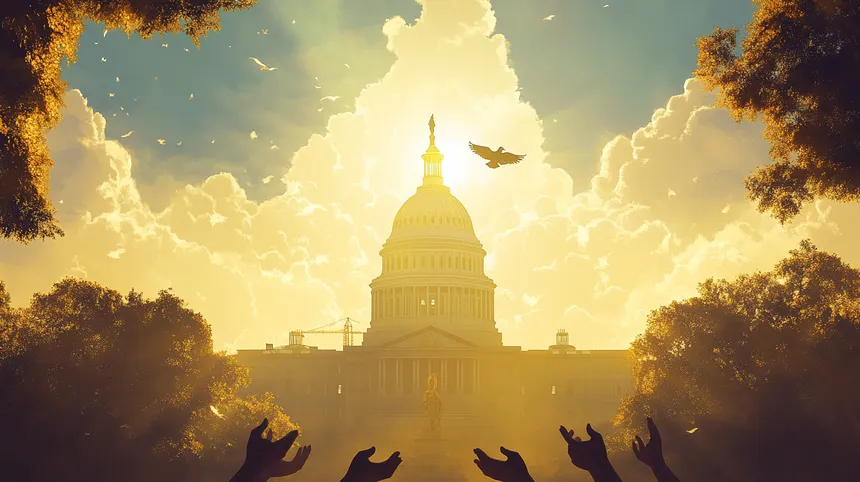
A new dawn over democracy, symbolizing hope, unity, and the triumph of justice and the rule of law.
Newcastle, WA – The 2024 election represents a pivotal moment for American democracy. It is not just a choice between two political parties, but a decision about the future of democratic governance, civil liberties, and the rule of law. Former president Donald Trump’s candidacy for re-election threatens to undermine these core principles, posing a significant risk to the institutions that safeguard democracy. Electing Trump again would be a grave mistake, one that could accelerate the country’s descent into anti-democratic governance and lead to the erosion of civil rights, accountability, and institutional checks.
Trump’s Pattern of Lawlessness
Throughout his presidency, Trump demonstrated a consistent disregard for the rule of law. Impeached twice, accused of sexual misconduct, and repeatedly involved in attempts to obstruct justice, including during the investigation into Russian interference in the 2016 election, Trump’s actions have escalated since leaving office, culminating in multiple criminal indictments. His involvement in the January 6 insurrection is a stark example of how far he is willing to go to subvert democratic norms for personal gain.
Here’s a concise reminder of key actions Trump has taken that demonstrate his disregard for law, democracy, and ethical governance:
- Impeached twice: First for abuse of power (Ukraine scandal), second for incitement of insurrection (January 6 Capitol riot).
- Pressured Georgia officials to “find” votes to overturn the 2020 election results.
- Arranged a hush money payment to an adult film actress to silence their alleged affair.
- Convicted of falsifying business records in relation to election law violations (2024 conviction).
- Liable for sexual abuse and defamation in the E. Jean Carroll case.
- Found guilty of financial fraud by inflating his assets to secure favorable loans.
- Barred from running a charity in New York due to misuse of charitable funds.
- Settled Trump University lawsuits for $25 million after defrauding students.
- Indicted for illegally retaining classified defense documents and obstructing justice.
- Indicted for attempting to overturn the 2020 election (charges of conspiracy, obstruction, and fraud).
- Fired FBI Director James Comey to obstruct the Russia investigation.
- Spread false claims of election fraud, undermining trust in U.S. elections.
- Instigated the January 6 insurrection, urging supporters to storm the Capitol.
- Pardoned allies convicted of federal crimes, including Michael Flynn and Roger Stone.
- Profited from his presidency, violating the Emoluments Clause by using his businesses for government events.
- Barred from serving as a New York corporate officer and from taking loans due to fraud.
- Pressured foreign officials (e.g., Ukraine) to investigate his political opponents.
- Indicted in Georgia for racketeering under the RICO Act in relation to his efforts to overturn the 2020 election.
- Weaponized the DOJ to investigate political rivals and shield himself from investigations.
- Called for violent suppression of protests and targeted free speech by attacking the media.
Each of these actions reflects Trump’s blatant disregard for the rule of law, further underscoring the dangers of his re-election.
Trump’s Attack on the Democratic Process
One of the most alarming aspects of Trump’s re-election bid is his ongoing effort to undermine the democratic process itself. His refusal to accept the results of the 2020 election culminated in the deadly January 6 insurrection at the Capitol, where his supporters sought to overturn a legitimate election. Trump’s persistent false claims of widespread voter fraud have eroded public trust in elections, and his actions during the 2020 election, including pressuring state officials to alter results, illustrate a clear disregard for democracy. A second term would likely see Trump continue his attempts to weaken electoral integrity, leading to further erosion of the democratic process.
The Threat of Project 2025
A critical element of Trump’s 2024 campaign is his alignment with Project 2025, a sweeping plan devised by far-right organizations to reshape the U.S. government in ways that would centralize power in the executive branch and dismantle critical protections for civil rights. The People’s Guide to Project 2025 outlines how this initiative seeks to roll back social programs, weaken labor protections, and eliminate advancements in civil rights.
One of the most alarming proposals is the introduction of "Schedule F," which would allow Trump to purge non-loyalists from the federal civil service, replacing them with individuals who share his extremist views. This would not only undermine the independence of the civil service but also create a workforce of political loyalists, potentially corrupting agencies meant to serve the public impartially.
Project 2025’s agenda goes beyond labor issues, it proposes eliminating diversity and inclusion programs, curtailing reproductive rights, and rolling back LGBTQ+ protections. Its architects aim to drastically reduce the size of the federal government, slashing social safety nets like food assistance and public health programs that millions of Americans rely on. These actions represent not only an attack on civil rights but also a direct threat to the economic stability of vulnerable communities. The project’s blueprint, which includes consolidating presidential power without congressional oversight, poses an existential threat to democratic governance.
Local Impact: Trump’s Influence on Newcastle
Trump’s influence has not only impacted national politics; it has trickled down to local governments, emboldening leaders to act in ways that reflect his disregard for civil rights and public safety.
In Newcastle, former councilmember Steve Tallman appointed Aaron Brown Myers, a controversial figure with a record of reckless behavior, to the city’s public safety committee. Myers had previously called emergency services, stating he might have to shoot an unarmed bicyclist. Later, Myers was charged with shooting an unarmed teen during a 'vigilante' patrol. Despite these actions, Tallman acted as a character witness for Myers, reflecting the dangerous culture of impunity that Trump’s leadership fosters. Local leaders like Tallman, emboldened by Trump’s rhetoric, make decisions that put their communities at risk, highlighting the broader consequences of Trump’s divisive influence.
Newcastle’s Mayor Robert Clark has also adopted Trump’s playbook of divisiveness, using his platform to make inflammatory and exclusionary remarks. During a city council meeting, Clark compared the Pride flag to extremist symbols like the Hamas flag and MAGA banners, and during Pride Month, he claimed the LGBTQ+ community fostered "hate and division." He further dismissed calls for racial reparations, advising Black Americans to "stop being victims." These statements, which mirror Trump’s own inflammatory rhetoric, create a hostile environment for marginalized communities and reflect the deep influence Trumpism has on local governance. Clark’s resistance to recognizing the contributions of minority communities, such as his opposition to proclaiming Hindu Heritage Month, further demonstrates how Trump’s influence undermines inclusivity at every level of government.
The Dangers of a Second Trump Term
The dangers of a second Trump term are not hypothetical. During his first presidency, Trump pushed the boundaries of executive power, often undermining legal and institutional checks. In a second term, Trump would likely face even fewer constraints, having learned how to sidestep legal and political challenges more effectively. With the support of Project 2025, Trump would have a roadmap for consolidating power, weakening democratic institutions, and enacting policies that could entrench his anti-democratic agenda for years to come.
The Critical Role of Voting
This election is about more than just choosing between two candidates; it’s about defending the future of democracy. Disengagement or casting a protest vote for a third-party candidate could have dire consequences, effectively allowing Trump to win and implement his dangerous agenda. This is not the time for protest votes, now is the time to vote strategically and decisively to protect democracy and civil rights.
Kamala Harris: A Steady Hand for Democracy
Kamala Harris offers a stark contrast to Trump’s anti-democratic tendencies. While her leadership may not generate the same level of controversy or spectacle, she represents a return to integrity, respect for the rule of law, and a commitment to upholding democratic principles. Harris’s presidency would focus on restoring faith in government, protecting civil liberties, and ensuring that America remains a nation where all voices are heard. Her leadership promises to steer the country away from the chaos and division that has defined Trump’s influence, providing a steadier path forward.
Conclusion: The Stakes in 2024
The stakes in the 2024 election are incredibly high. Democracy is fragile, but it can be protected through active participation. Voting for leaders who are committed to upholding democratic norms, protecting civil rights, and ensuring accountability at every level of government is essential. The fight for democracy isn’t limited to the presidency, it extends to local elections, where officials like Steve Tallman and Robert Clark show how Trump’s influence can erode governance at every level.
This election is a critical opportunity to stop the spread of anti-democratic governance before it becomes entrenched. By voting in record numbers and supporting leaders who will defend democracy, we can secure a future where freedom and justice prevail.
